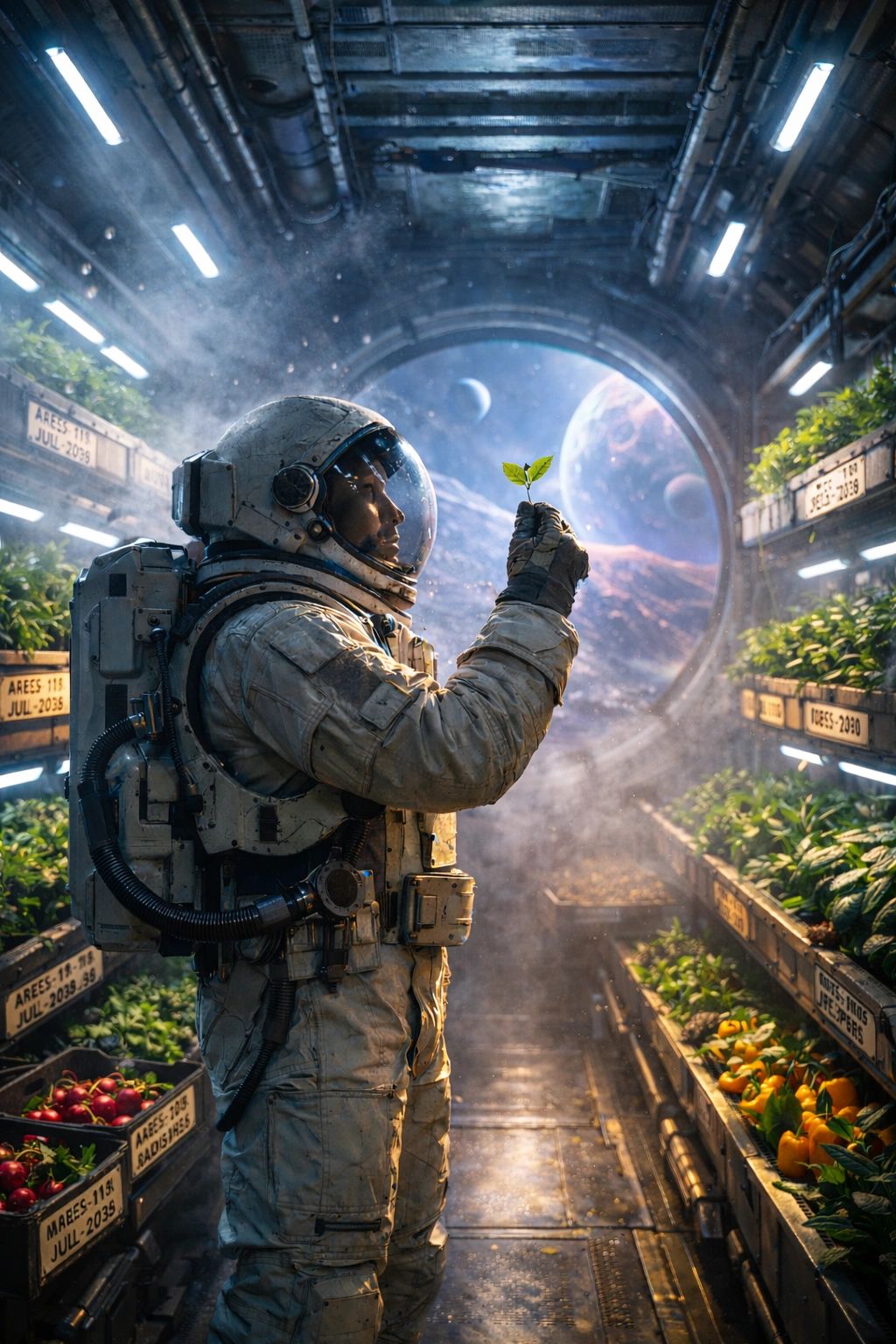
How Gastronaut Is Engineering Better Crops for Space

When most people hear “CRISPR,” they think of futuristic medicine or sci-fi gene editing. At Gastronaut, we’re using it for something far more practical and urgent: growing real, nutrient-dense food that actually works in space.We are a biotech company first. Our core product isn’t the ORCA rack — it’s the living biology inside it. CRISPR is the precision tool we use to upgrade ordinary microgreens so they can thrive where nothing else can.What Is CRISPR, Really?Think of CRISPR as a highly accurate pair of molecular scissors combined with a find-and-replace function for DNA. Instead of adding foreign genes from bacteria or viruses, we make small, targeted upgrades to the plant’s own existing DNA. These edits are stable, heritable, and designed to enhance traits the plant already possesses — just dialed up to survive the brutal conditions of space.How We Use CRISPR in ORCA CropsOur CRISPR program focuses on four critical pathways that fail in microgravity and radiation:
- ROS Mitigation
We upregulate the antioxidant enzymes SOD, CAT, and GPX. In space, reactive oxygen species (ROS) spike 5× higher and destroy nutrients. Our edits cut ROS by 40–60%, preserving phenolics and overall nutritional quality. - Calcium Biofortification
We enhance calcium signaling and uptake genes. Result: +140% calcium retention (>1,000 mg/kg) compared to standard space-grown crops that lose 30–50% of this critical mineral. - Radiation Resistance
We strengthen DNA repair pathways (RAD51 homologs) to reduce radiation-induced damage by 30–50%, keeping the plants healthy even on long missions beyond Earth’s magnetosphere. - Gravitropism & Stress Tolerance
Edits to PIN auxin transport genes and DREB/ERF stress-response factors help roots grow properly and tolerate the low-humidity, high-stress environment inside a spacecraft.
These are not theoretical improvements. They have been validated through 1,042+ ground simulation cycles and directly address the deficiencies documented in the 2025 npj Microgravity paper. Why This Matters for AstronautsAstronauts on long missions lose bone density, suffer immune suppression, and experience leaky gut — partly because the food they grow in space is nutritionally compromised. Our CRISPR-optimized microgreens don’t just provide calories. They actively counteract those problems by delivering bioavailable nutrients, antioxidants, and fiber in a form the human body can actually use.When grown inside the ORCA platform’s partial-gravity centrifuge, the results are even stronger: superior nutrition, 20–25% biological ECLSS contribution (CO₂ scrubbing + O₂ generation), and fresh food that supports crew morale. The Bigger PictureCRISPR lets us move from “growing food in space” to engineering resilient biology for deep space.
It is the reason Gastronaut is fundamentally a biotechnology company — not a hardware manufacturer. The ORCA rack is simply the delivery vehicle for our living, gene-edited crops.In the coming years, this same technology will power everything from lunar greenhouses to Mars surface farms and high-performance vertical farming here on Earth. We’re not just feeding astronauts.
We’re building the biological infrastructure that makes human presence beyond Earth sustainable.What do you think — is CRISPR the missing piece that finally makes space agriculture viable?
Drop your thoughts in the comments.
Stay curious,
The Gastronaut Team